Putting Context into Context Engineering
Context engineering is one of the latest buzzwords across the AI community. The basic idea is to both improve the quality and manage the cost of a conversation with an LLM AI by augmenting the…
Context engineering is one of the latest buzzwords across the AI community. The basic idea is to both improve the quality and manage the cost of a conversation with an LLM AI by augmenting the…
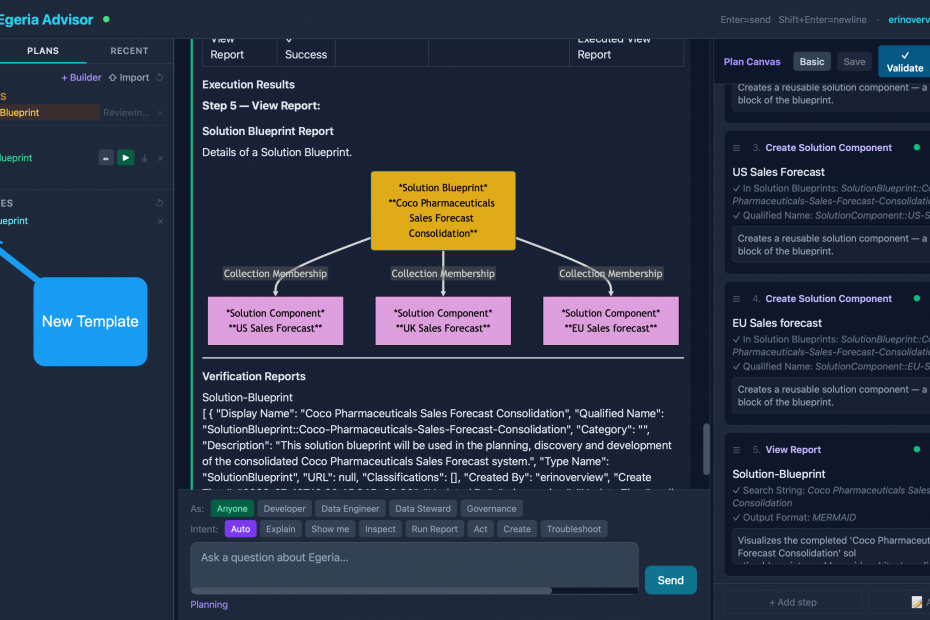
In my last post, Egeria Advisor: The Live Gateway and the Feedback Loop, we explored how the Egeria Advisor transitioned from a passive reference guide into an active operational tool by integrating the Model Context…
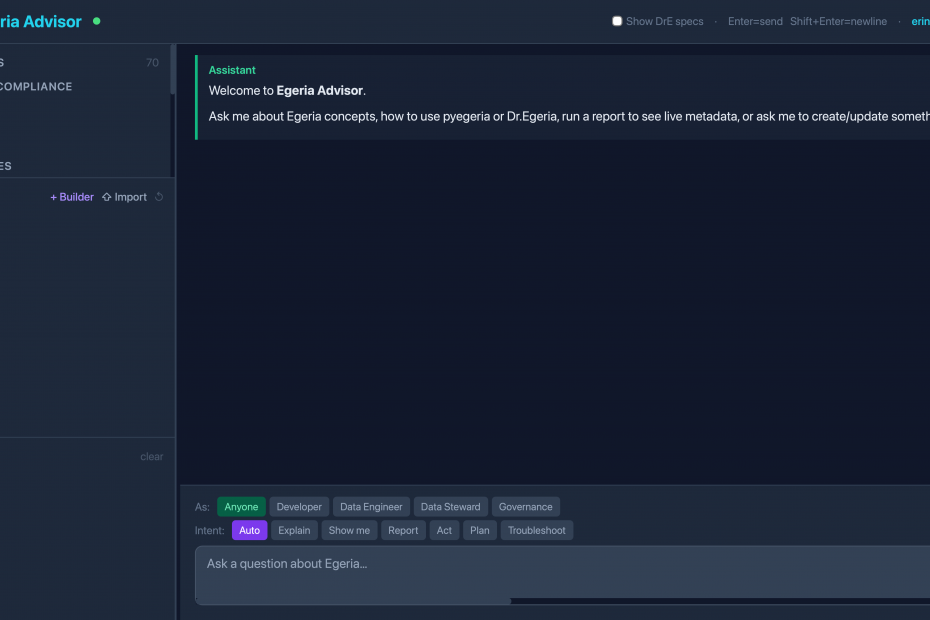
In my last post, I detailed how we addressed the challenge of non-determinism by moving to a coordinated multi-agent architecture and introducing explicit Intent and Perspective controls into the front-end Web UI. By wrapping our…
In my last post, The Egeria Advisor: Casting Out Egeria Expert – Lessons Learned, I shared how we expanded the data scope of the Egeria Advisor to include core code repositories like egeria-python, egeria (Java), and egeria-workspaces. This expansion…
In my last post, The Egeria Advisor: Sharing the Journey, I introduced the foundational vision behind the Egeria Advisor—injecting “Context Intelligence” into AI applications by leveraging organizational and situational context to provide more useful results. But…

In my first post on Data Readiness, I introduced the notion of a Data Readiness activity to provide the AI development team with the political power to make the resources (typically data and subject matter…

A Data Lens is a specification of the data needed to support an AI development project. It reflects the scope of the business problem/opportunity laid out by the sponsors, but has sufficient detail to act…

An AI project often starts in a back room, as a series of experiments. Its operation at that time can be low key and informal. At the other end of the spectrum, an AI project…

In my previous post, I outlined five key pillars: Scope, Compliance, Trustworthiness, Understandability, and Cost. While these pillars provide a design framework, moving an AI application from an interesting experiment to a production-grade tool is not a…

Scientific data includes context information (metadata) to make its creation reusable in downstream analysis. This metadata comes with a vocabulary that is helpful in understanding how business data – that is data from the systems…