
Introducing Context Intelligence
Many hopes and dreams are being fueled by the wonders and hype of AI systems. Yet those of us that have been through these technology-hype cycles before recognize the inevitable. AI technologies will help in…
Many hopes and dreams are being fueled by the wonders and hype of AI systems. Yet those of us that have been through these technology-hype cycles before recognize the inevitable. AI technologies will help in…
Dear clients, partners, and friends, As we reach the end of 2024, it is once again a good opportunity to reflect on our achievements and learning over the past year, and to provide our perspective…
Active Surveying Beyond the Catalog Perimeter · Part 2 One catalog of questions across five resource types, and what a single row of it actually contains. If the Funnel Is the Shape, This Is the…
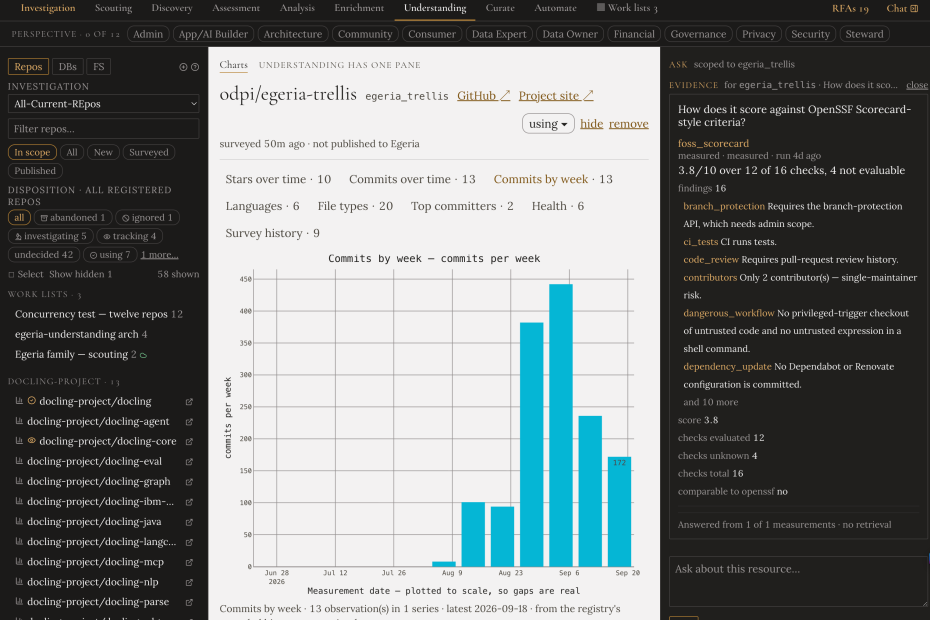
Survey first, catalog the worthy.
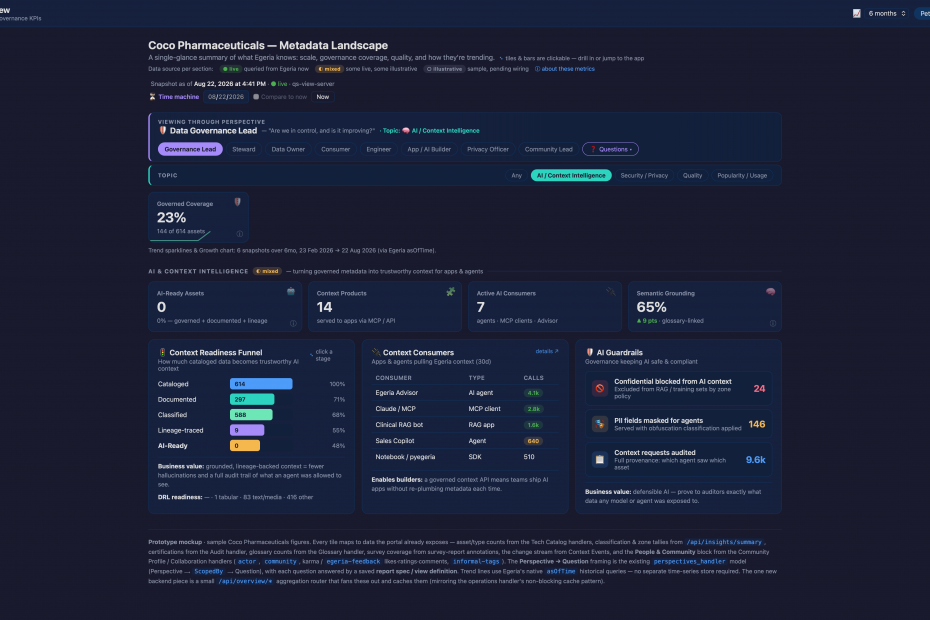
Four and a half months ago, egeria-workspaces was one working demo. Since the v6.02 tag on April 2nd, it’s grown into a small constellation of purpose-built apps over Egeria’s metadata — plus the time-travel, bulk…
Context engineering is one of the latest buzzwords across the AI community. The basic idea is to both improve the quality and manage the cost of a conversation with an LLM AI by augmenting the…
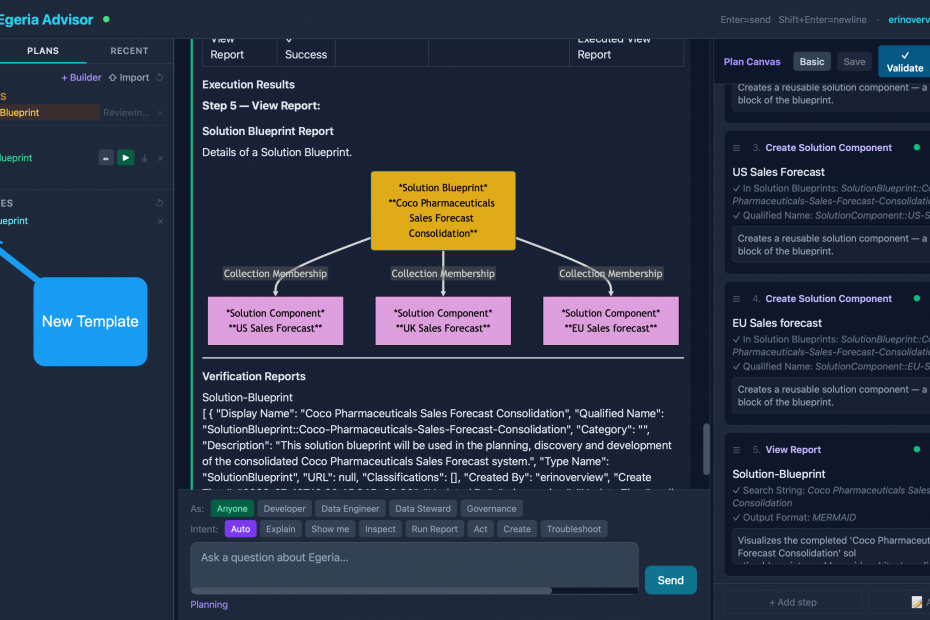
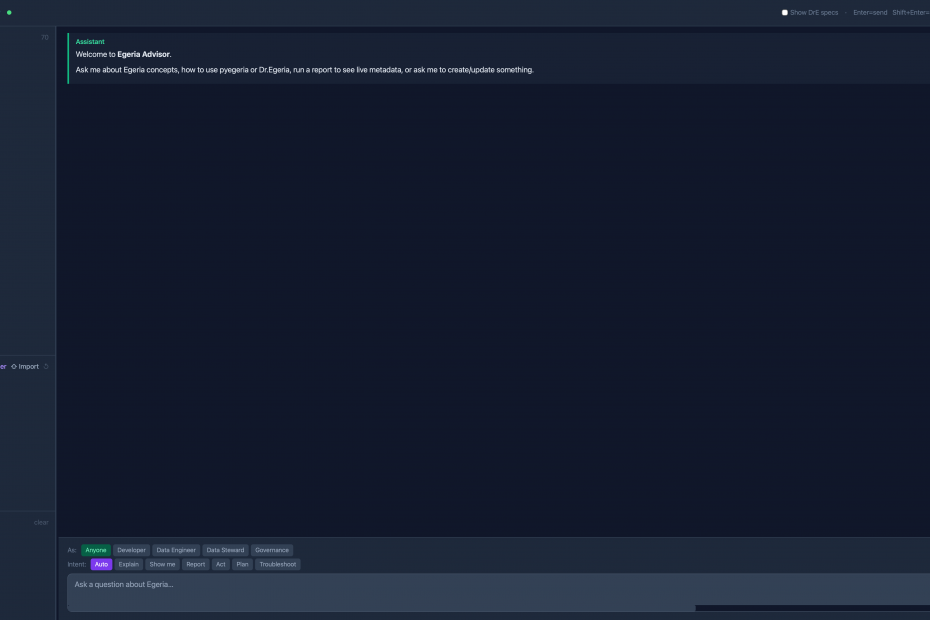
In my last post, Egeria Advisor: The Live Gateway and the Feedback Loop, we explored how the Egeria Advisor transitioned from a passive reference guide into an active operational tool by integrating the Model Context…
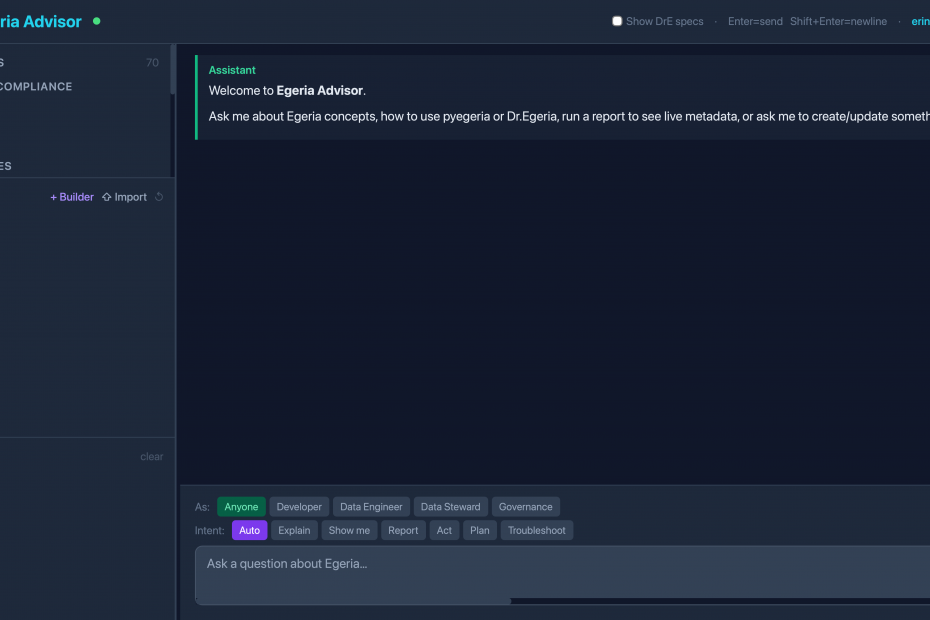
In my last post, I detailed how we addressed the challenge of non-determinism by moving to a coordinated multi-agent architecture and introducing explicit Intent and Perspective controls into the front-end Web UI. By wrapping our…
In my last post, The Egeria Advisor: Casting Out Egeria Expert – Lessons Learned, I shared how we expanded the data scope of the Egeria Advisor to include core code repositories like egeria-python, egeria (Java), and egeria-workspaces. This expansion…
In my last post, The Egeria Advisor: Sharing the Journey, I introduced the foundational vision behind the Egeria Advisor—injecting “Context Intelligence” into AI applications by leveraging organizational and situational context to provide more useful results. But…
Dan Wolfson We have to build systems that people want to use, that provide value to them individually, that makes their work life better – not just view humans as knowledge sources to train the…

In my first post on Data Readiness, I introduced the notion of a Data Readiness activity to provide the AI development team with the political power to make the resources (typically data and subject matter…